

Promotion of the Safety Standards Manual and Training of RAC Technicians on Flammable Refrigerants in Albania
09/12/2025INFOGRAPHIC OVERVIEW MANUAL ON SAFETY STANDARDS AND GOOD PRACTICES FOR FLAMMABLE REFRIGERANTS
11/12/2025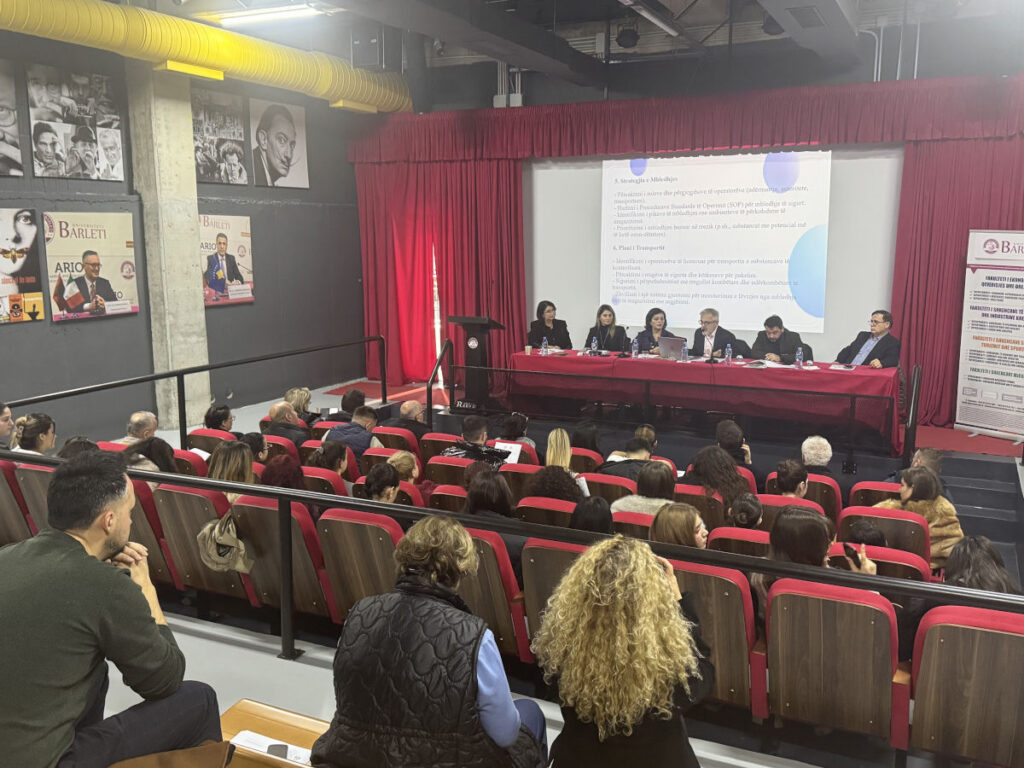
The Third National Consultation was organized by the National Ozone Unit (NOU) in cooperation with Barleti Group, under the patronage of Mr. Adriatik Dudaj. The consultation successfully achieved its planned objectives and served as an inclusive platform for technical consultation and exchange on the progress of the project “Preparation of the Inventory of Unwanted Controlled Substances for Albania and Preparation of the National Action Plan.”
The meeting brought together approximately 65 participants, including representatives from Barleti Group, the National Ozone Unit (NOU), architecture and construction studios, the RAC Association, as well as other relevant stakeholders from the public sector, private sector, and academia.
The opening remarks and presentation of the meeting objectives were delivered by Mr. Neritan Sejamini, National Consultant, who highlighted the importance of the consultation for the finalization of the inventory and the preparation of a realistic and implementable National Action Plan.
Ms. Etleva Dobjani, Lecturer and Head of the Department of Architecture and Design at UNIBA, emphasized the importance of inter-institutional cooperation and private sector engagement in this critical process for the protection of the ozone layer and the climate.
The overall progress of the project was presented by Ms. Mimoza Vokshi, Coordinator of the National Ozone Unit, with a focus on:
- the progress achieved in the preparation of the inventory;
- challenges encountered during data collection from public institutions and the private sector and in compiling the inventory of unwanted controlled substances in Albania;
- the strategic importance of the inventory for fulfilling Albania’s obligations under the Montreal Protocol, in particular the Kigali Amendment.
Mr. Ledio Kosta, Lecturer at Barleti University, presented the preliminary findings of the inventory of unwanted controlled substances, including:
- data collected from public institutions and private entities;
- analysis of the main sources of these substances;
- identification of existing banks of unwanted controlled substances.
Discussions among participants contributed to clarifying additional data sources and underscored the importance of preparing this inventory for the first time in Albania.
Ms. Silvana Delia, Lecturer at Barleti University, addressed the legal and institutional framework for the management of ODS and HFCs, focusing on:
- the implementation of F-gas legislation in Albania;
- alignment with the new EU Regulation (EU) 2024/573;
- existing strengths and challenges at the national level.
Mr. Ilir Palushaj, National Consultant, presented an overview of current capacities for the management of controlled substances and existing practices, highlighting:
- challenges related to the handling, storage, and identification of unused substances;
- concrete recommendations for strengthening technical and institutional capacities.
The structure of the initial draft of the National Action Plan was presented by Mr. Neritan Sejamini, who explained the methodological approach for its preparation, the proposed measures and interventions, the roles of responsible institutions, inter-institutional cooperation mechanisms, and the timeline for finalization.
Detailed discussions were held on each component of the draft plan, with constructive feedback provided by participants.
During the open discussion session, participants provided:
- suggestions for improving the draft inventory;
- comments and proposals regarding the measures included in the National Action Plan;
- ideas for strengthening cooperation with the private sector and identifying additional data sources.
A special contribution to the meeting was made by Prof. Gjergj Simaku, former Deputy Minister of Infrastructure and Energy, who emphasized the role and importance of energy efficiency in HVAC systems.
In conclusion, the key recommendations of the consultation were summarized, and timelines were agreed upon for the finalization of the inventory and the National Action Plan, as well as follow-up steps leading to the official closure of the project. The meeting concluded with a reaffirmation of the commitment of all stakeholders to continued cooperation and to the successful implementation of the project’s outcomes.


