

KIGALI 10 YEARS – EXECUTIVE SUMMARY
09/06/2026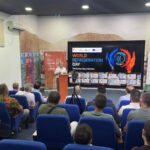
World Refrigeration Day in Albania: From the Importance of Cooling in Modern Life tothe Technologies of the Future
26/06/2026
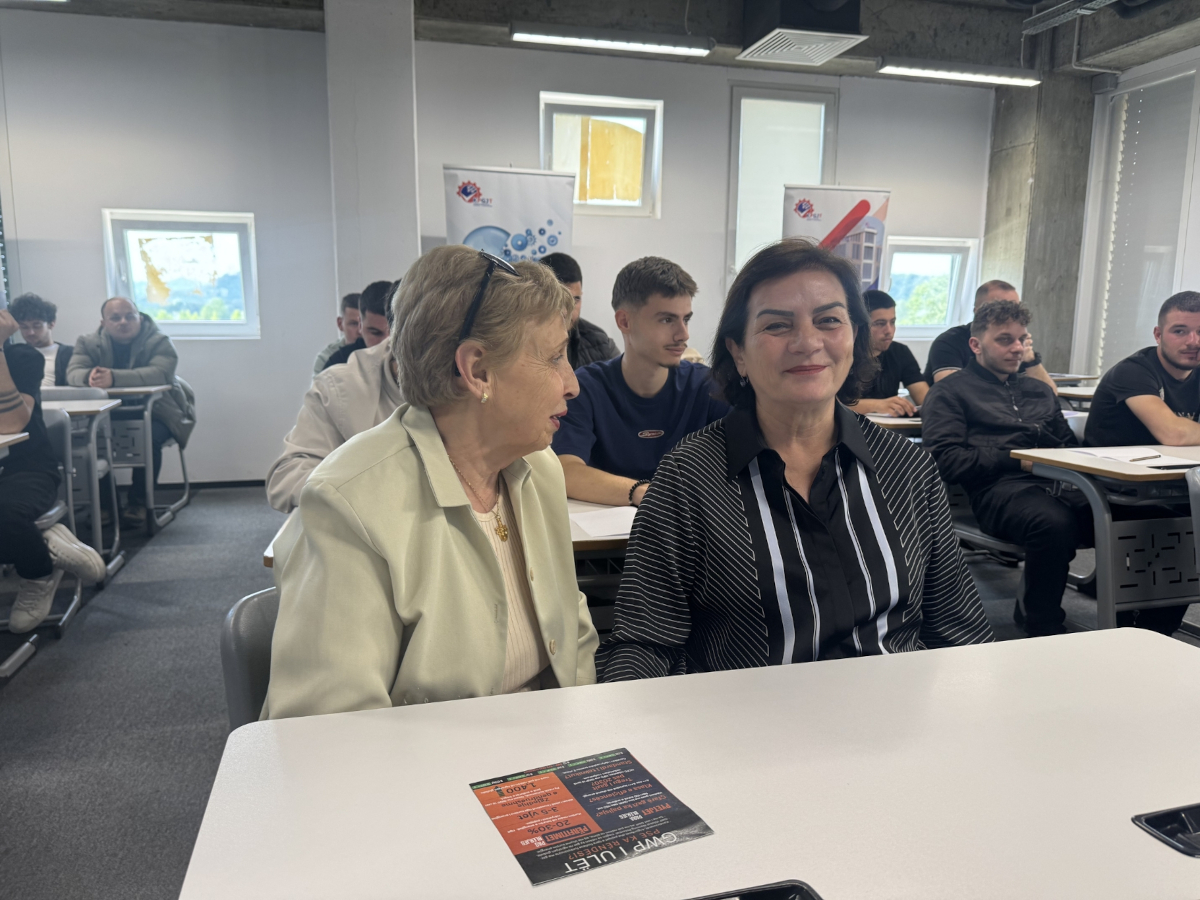
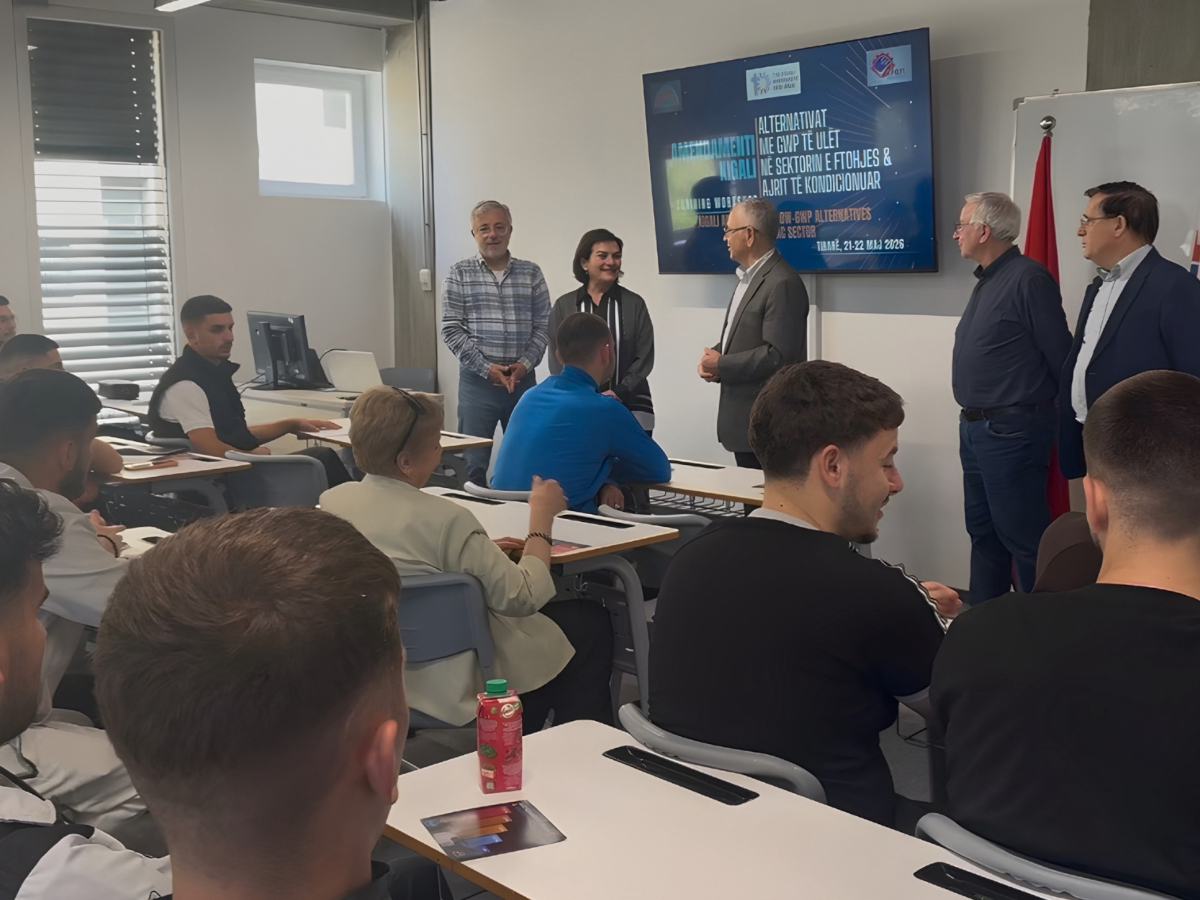
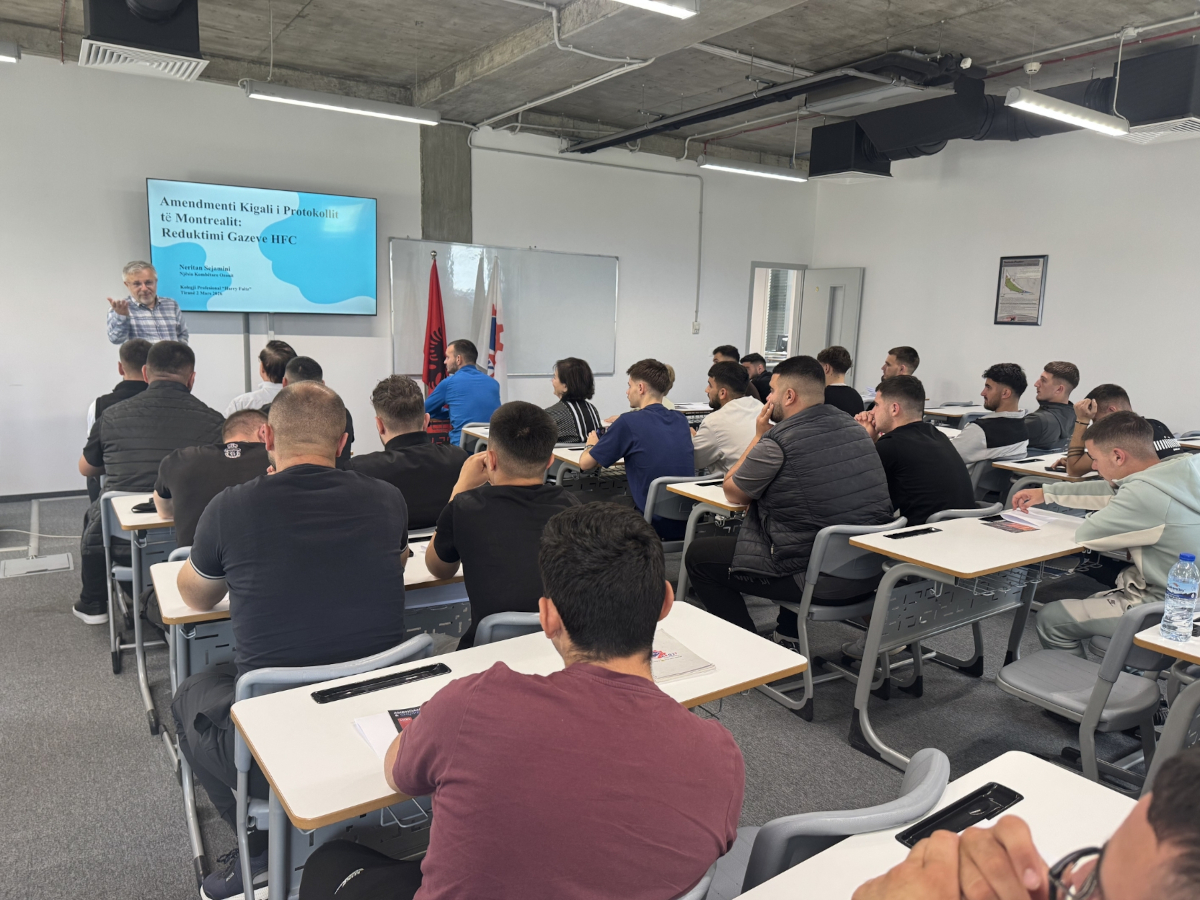
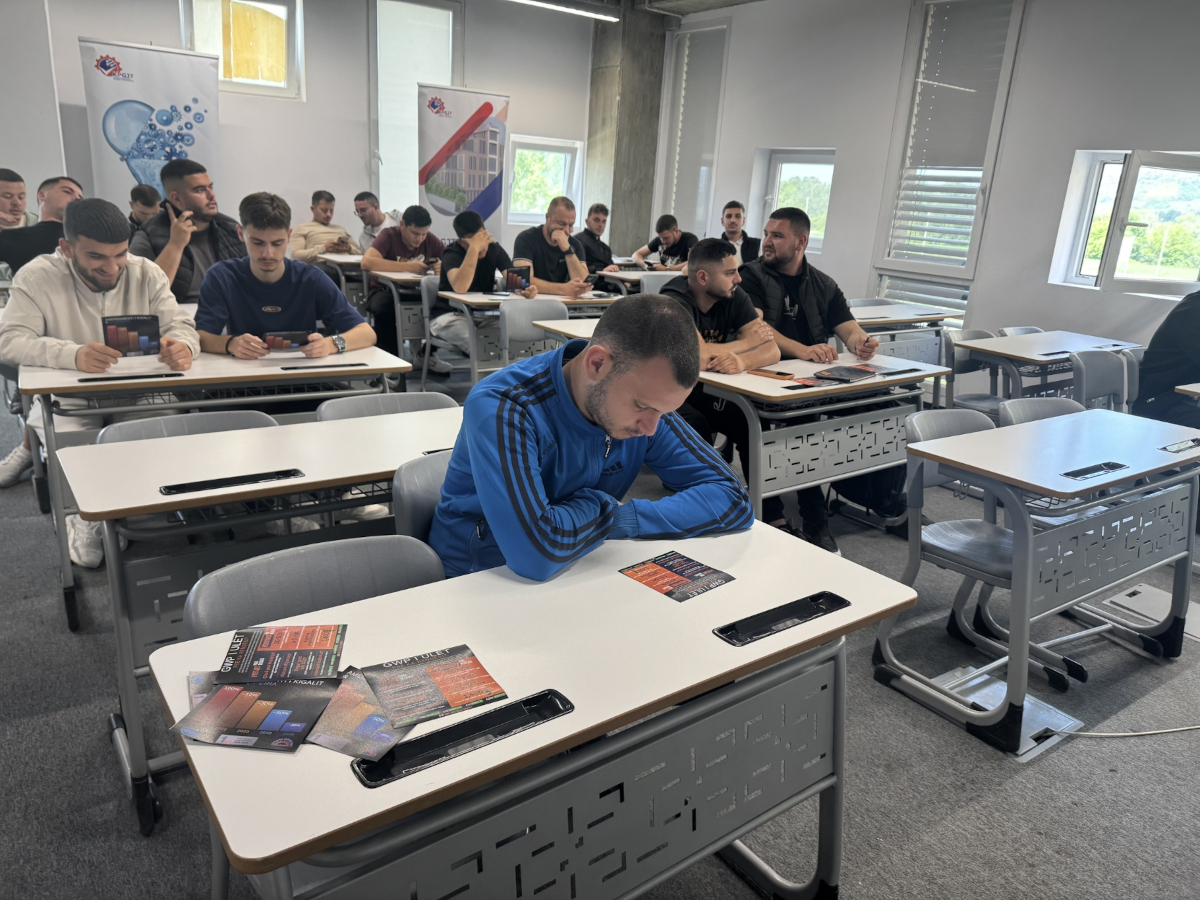
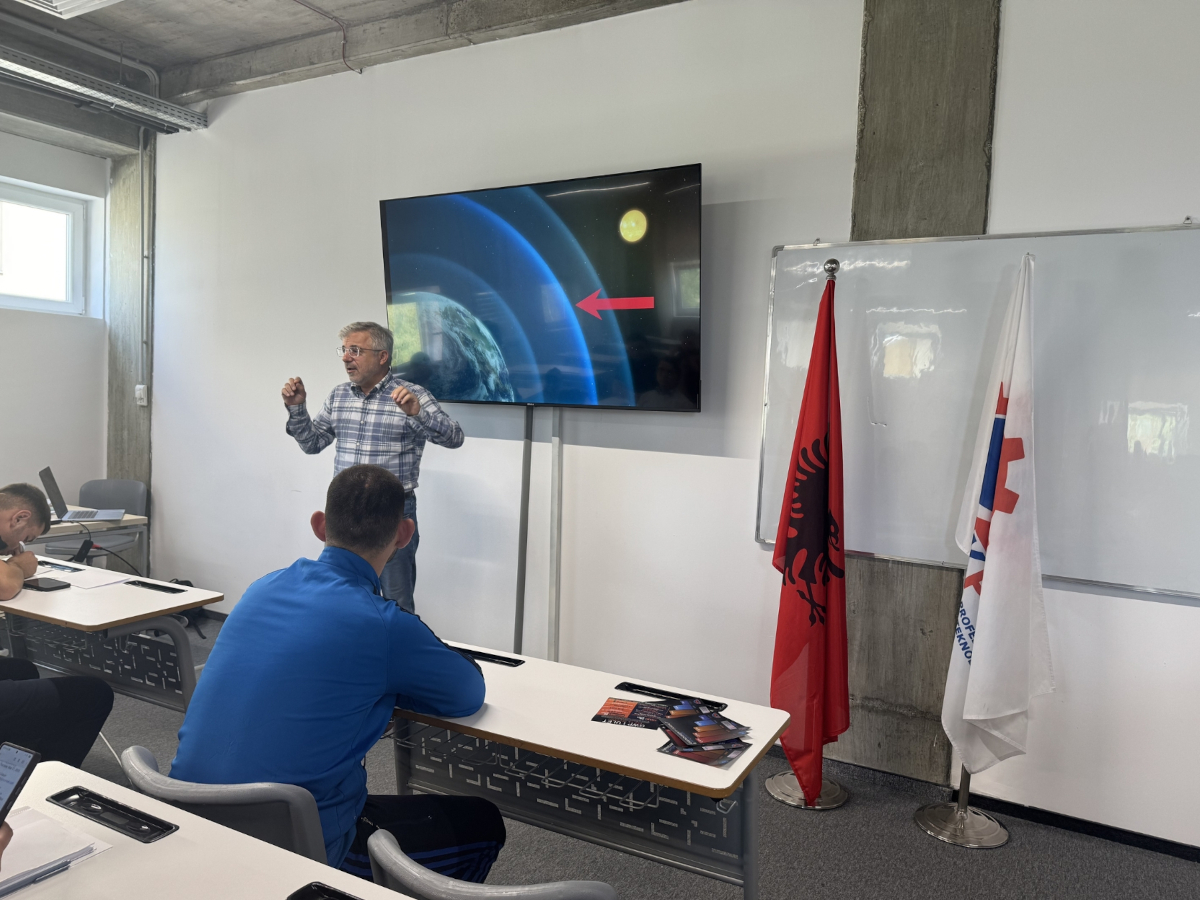
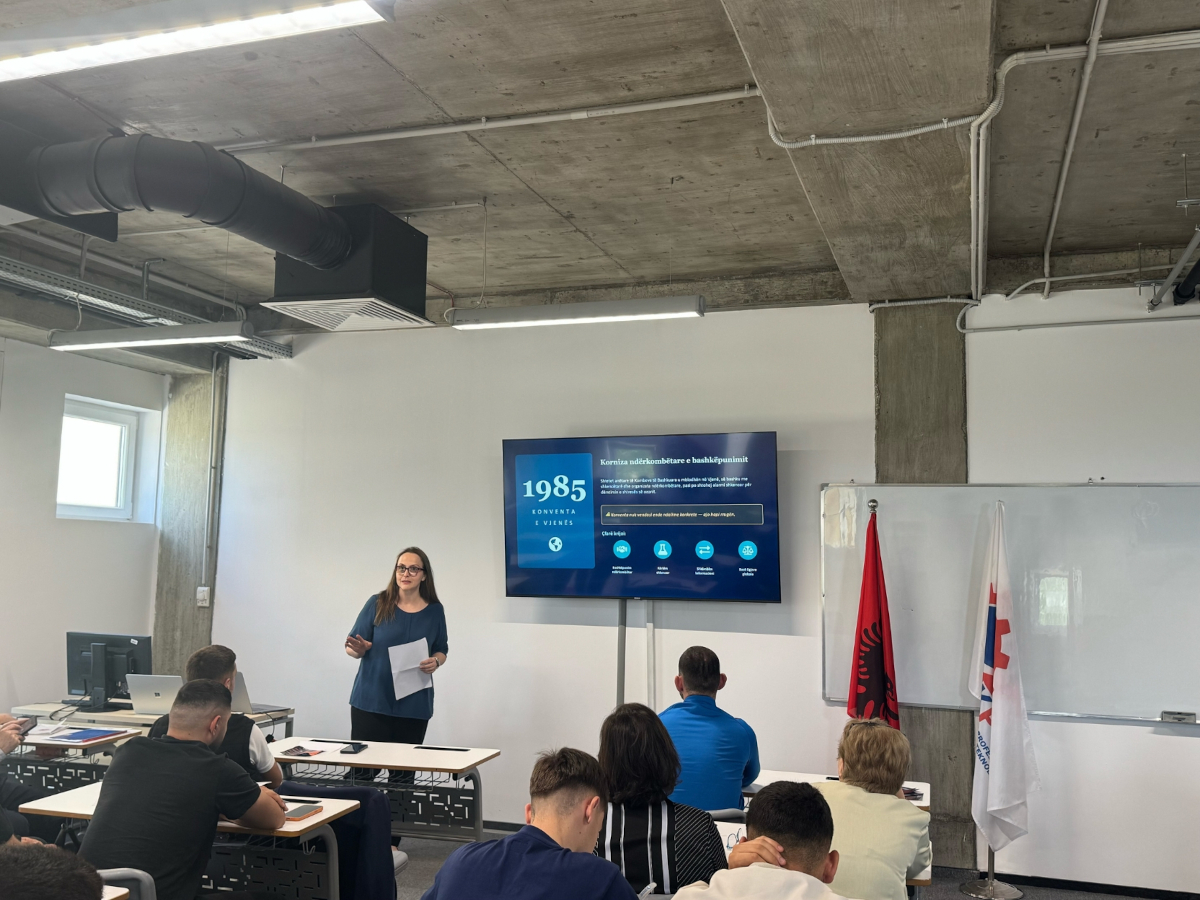
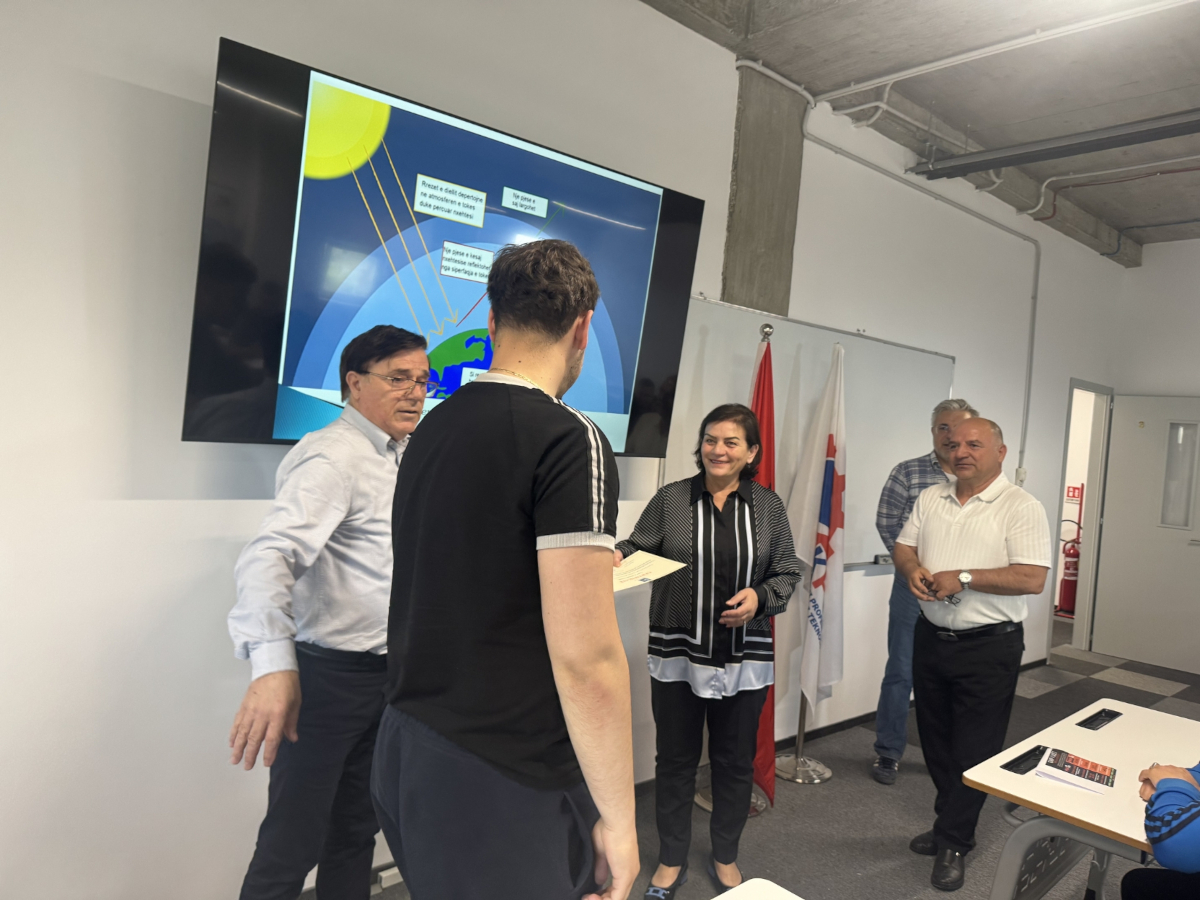
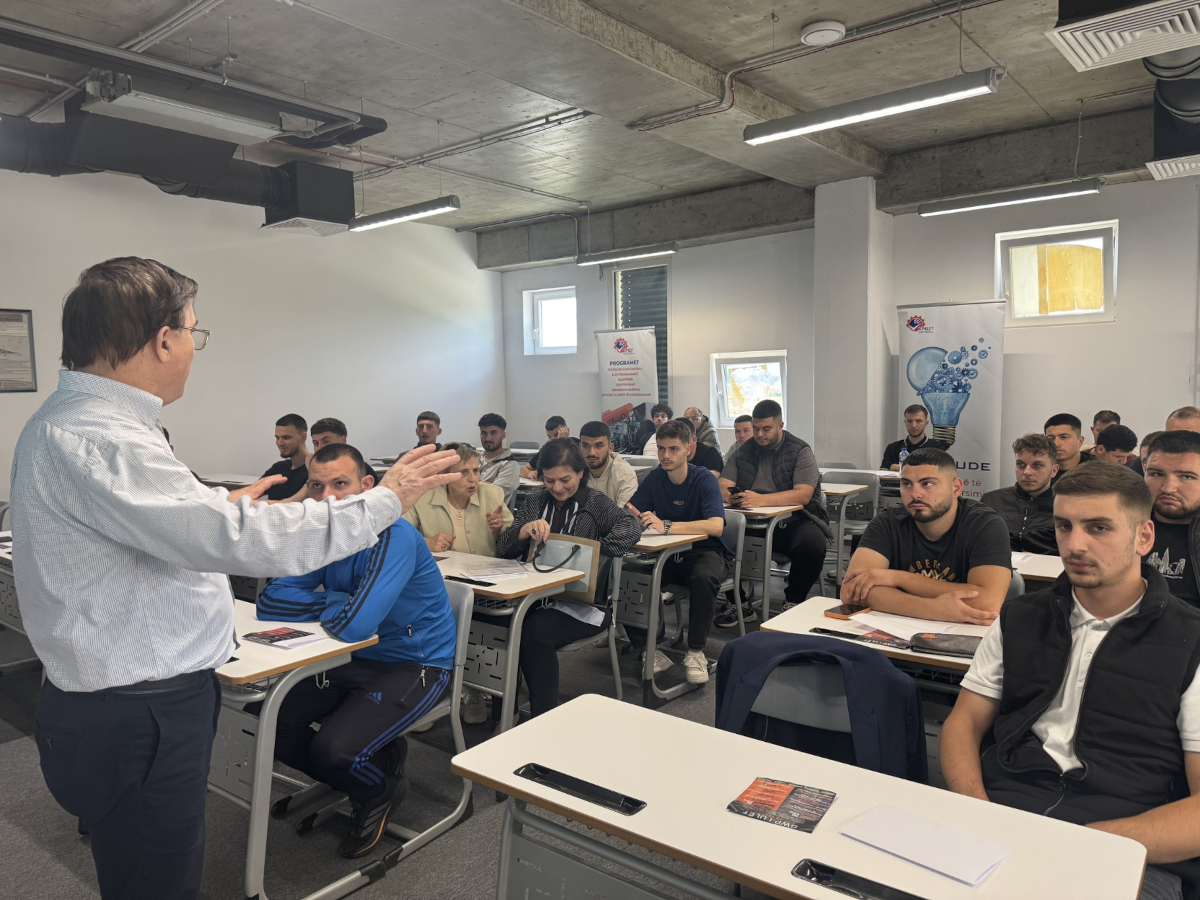
On 21–22 May 2026, the National Ozone Unit organized a two-day training at the German College of Technology on “The Kigali Amendment and Low-GWP Alternatives in the Refrigeration and Air Conditioning Sector”.
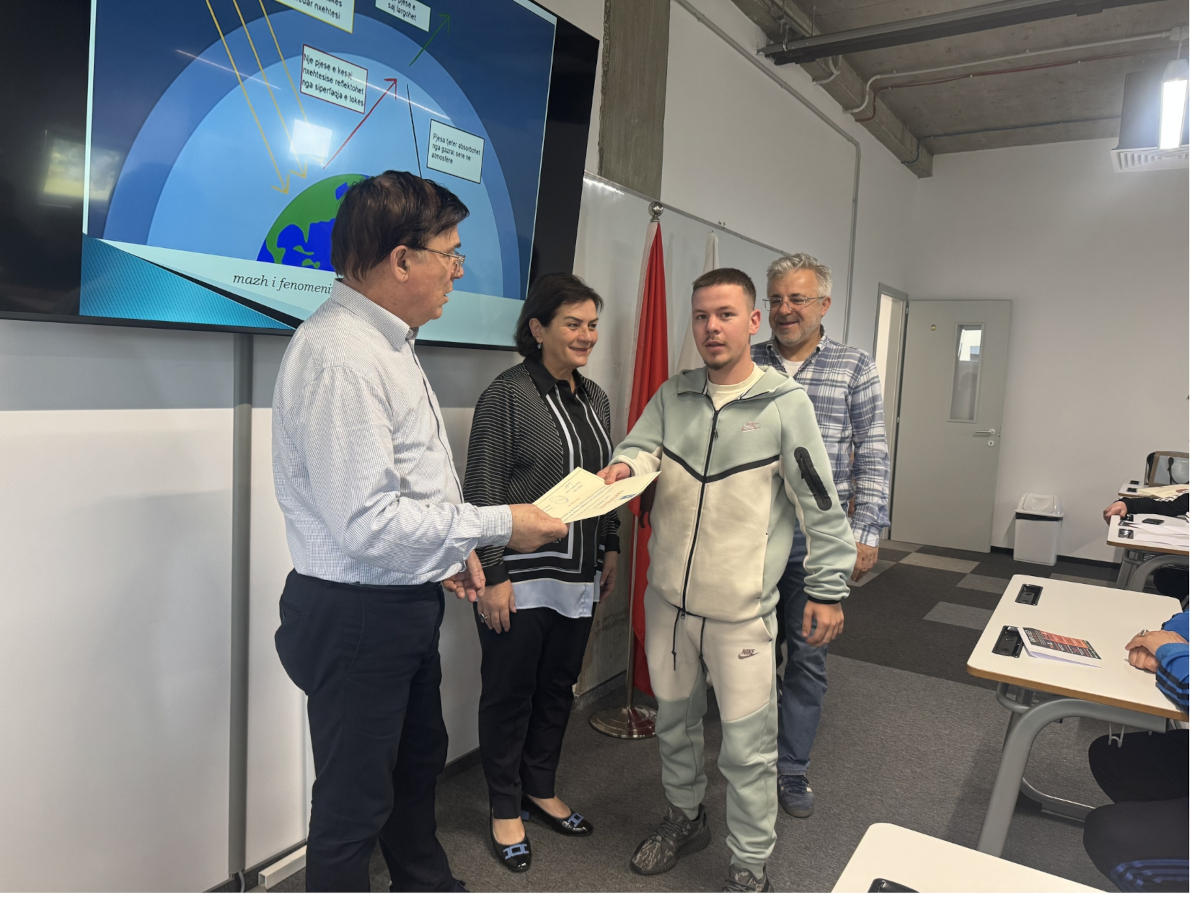
The event was welcomed by the Rector of the German College of Technology, Prof. Jorgaq Kaçani, and the Dean, Prof. As. Arjan Bisha, who praised the cooperation with the National Ozone Unit and highlighted the importance of preparing future professionals for the technological and environmental developments transforming the refrigeration and air conditioning sector.
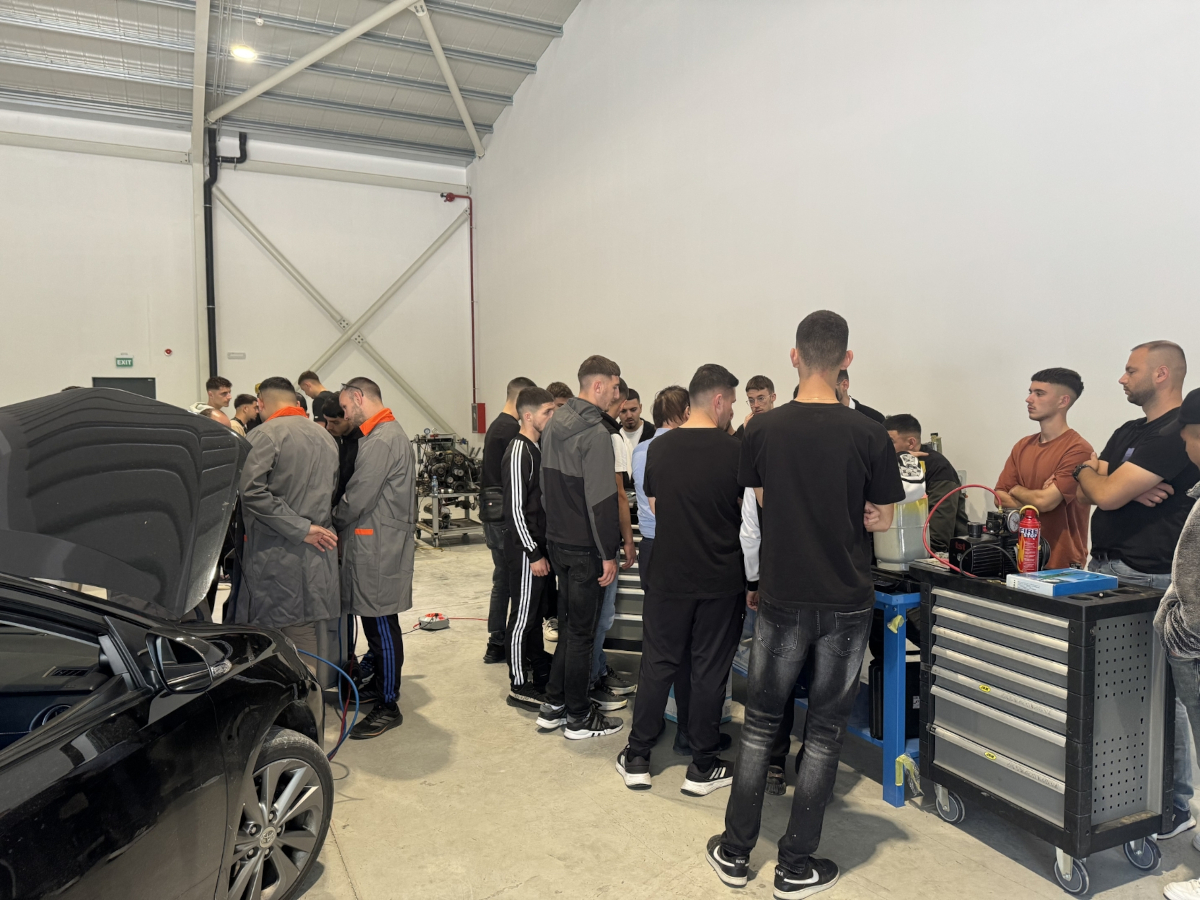
A total of 40 students participated in the training and were introduced to both the theoretical and practical aspects of the transition towards climate-friendly refrigeration technologies and refrigerants.
The first day focused on theoretical sessions. Students learned about the importance of the ozone layer, the history and achievements of the Montreal Protocol, as well as the Kigali Amendment and its role in reducing the climate impact of the RAC sector. The sessions also presented the international institutions and mechanisms supporting the implementation of the Kigali Amendment, together with Albania’s commitments under the agreement.
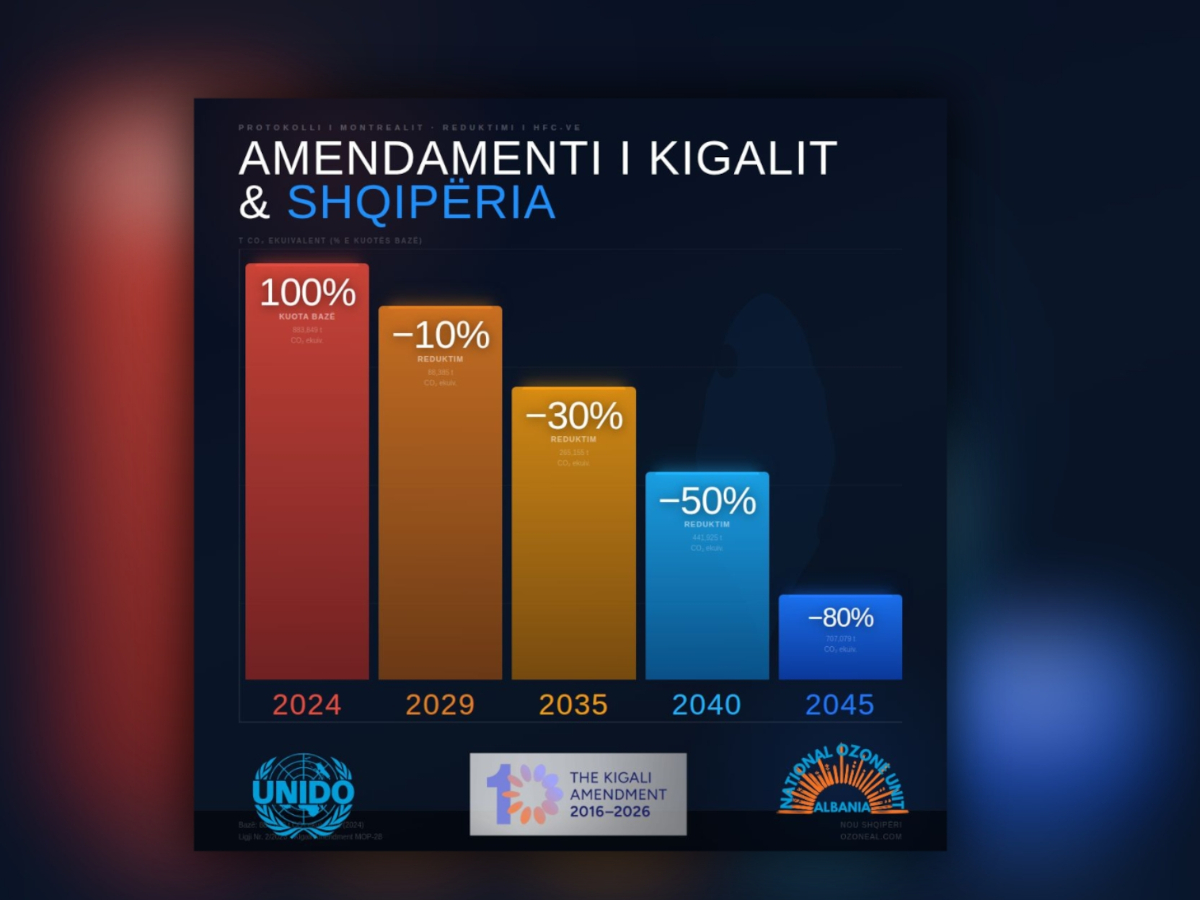
Participants were introduced to Albania’s commitments under the Kigali Amendment regarding the freeze and gradual reduction of hydrofluorocarbon (HFC) consumption. It was explained that, starting in 2024, HFC consumption in Albania has been frozen at the established baseline of 883,849 tonnes of CO₂ equivalent, which must not be exceeded and will be gradually reduced by 10% in 2029, 30% in 2035, 50% in 2040 and 85% in 2045, compared to the baseline level.
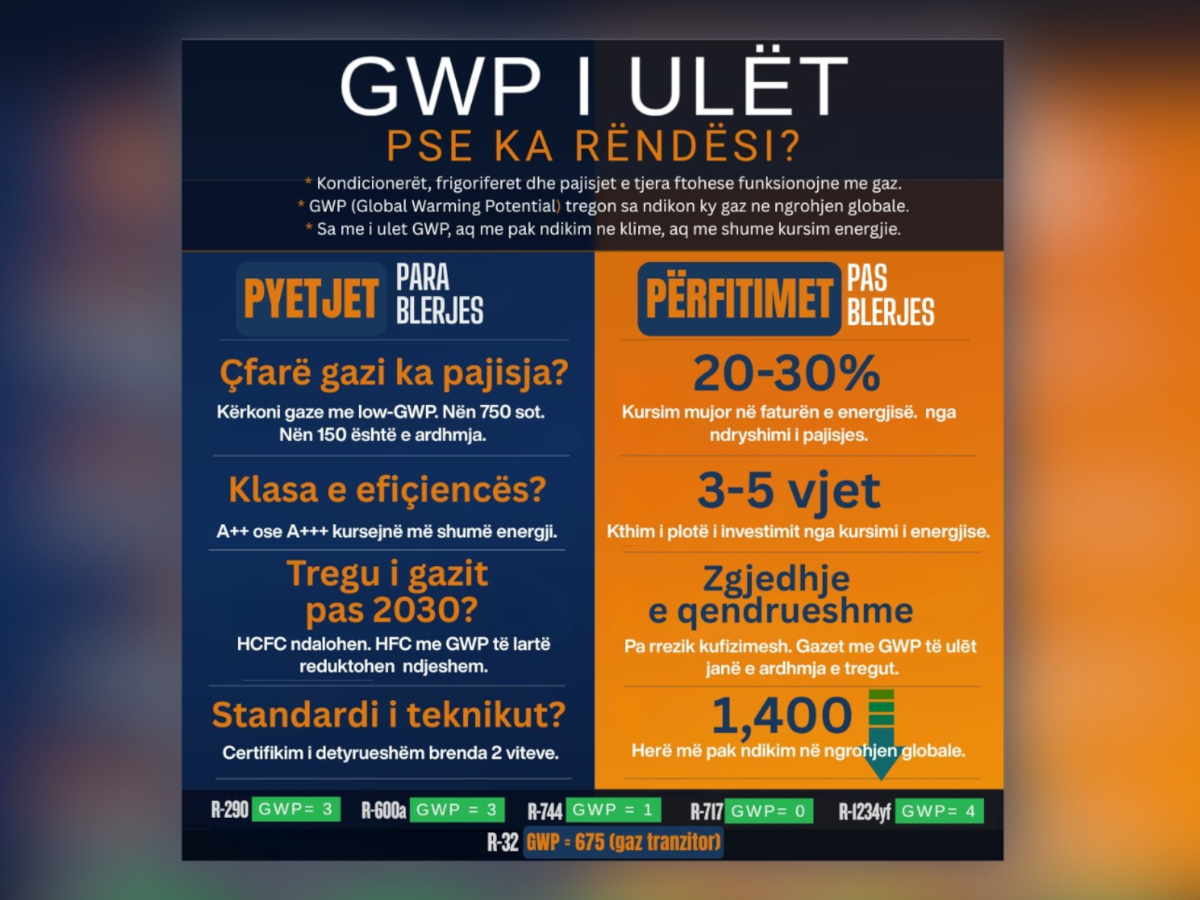
Discussions also focused on the transition towards refrigerants with lower Global Warming Potential (GWP), including R-290, R-600a, R-744 (CO₂), ammonia and R-1234yf, as well as the importance of preparing the sector for their safe and efficient use. Students were also introduced to the measures supporting this transition, including capacity building, technician certification, and improved refrigerant recovery and management practices.
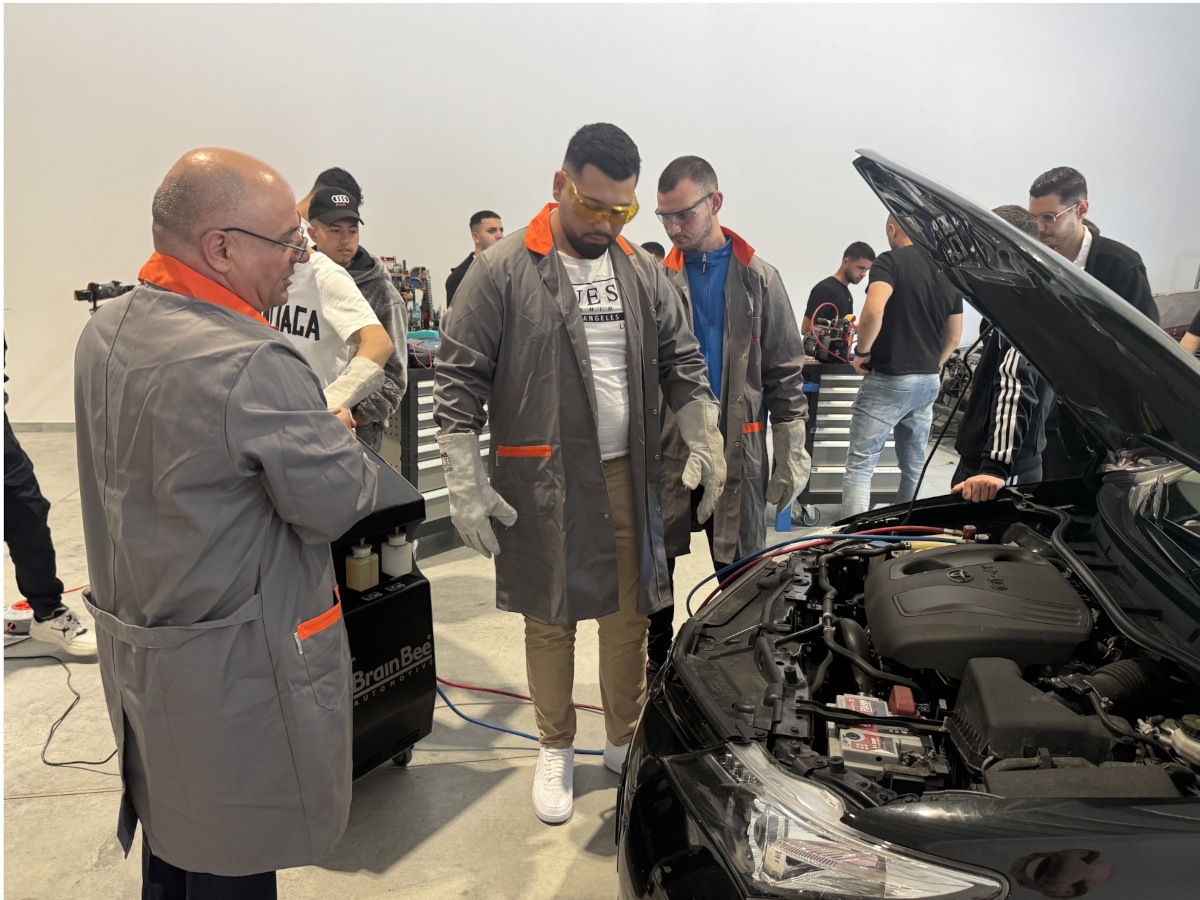
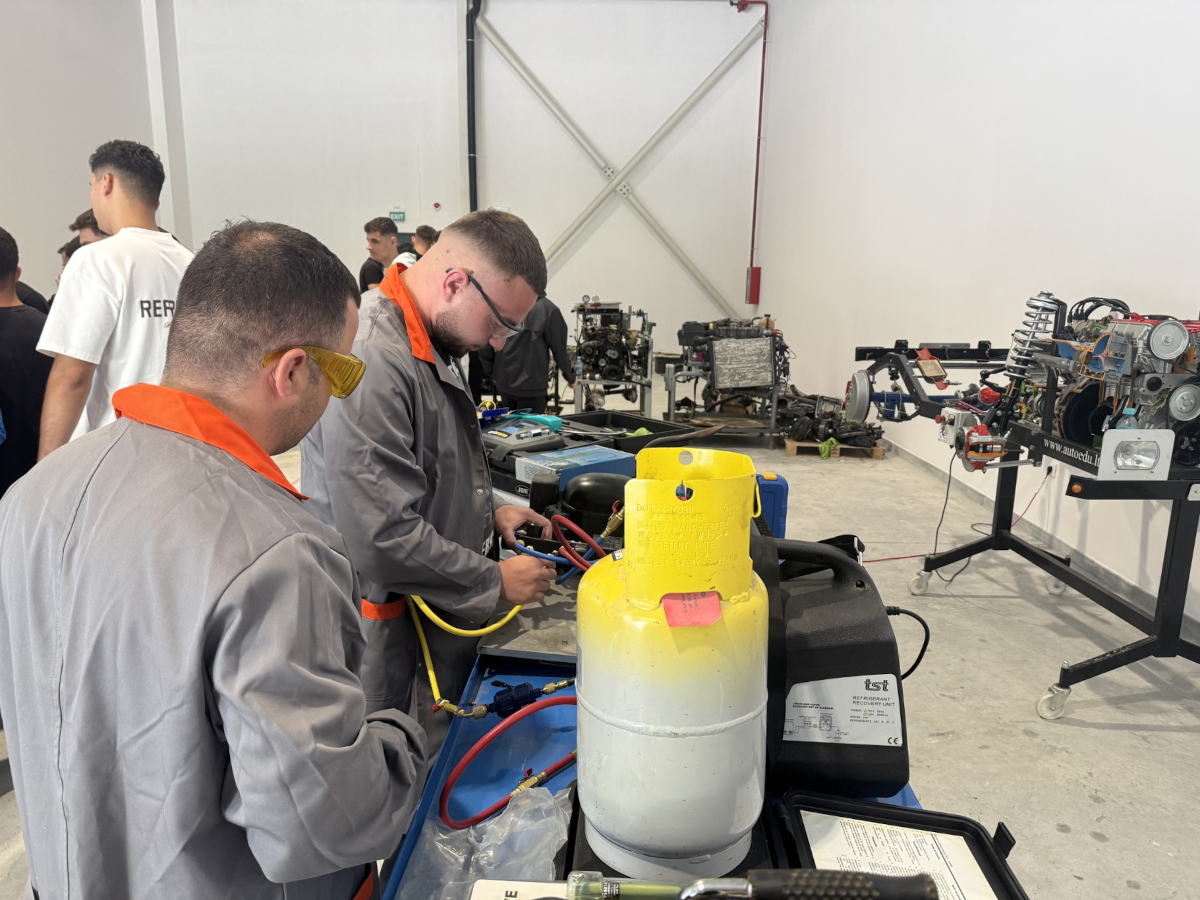
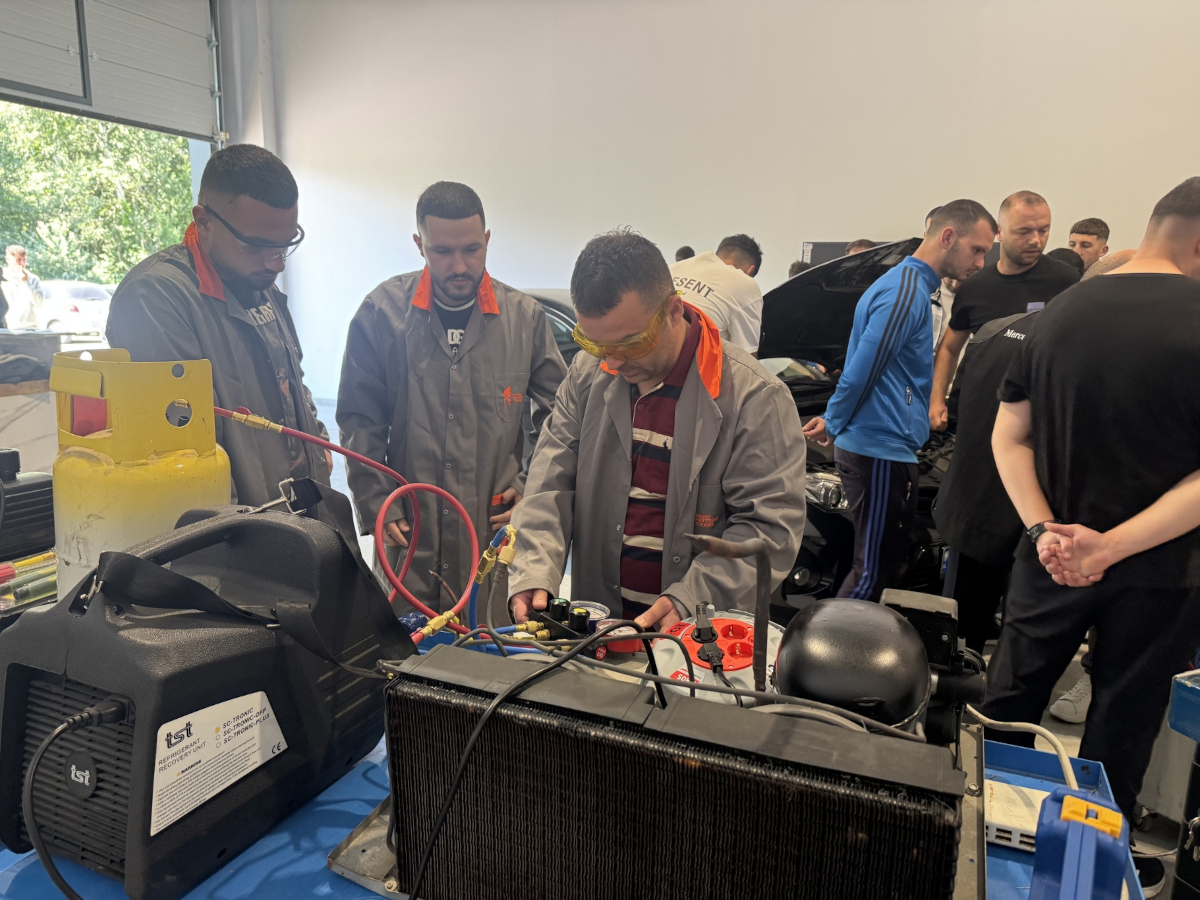
The second day was dedicated to practical sessions and technical demonstrations. Students were introduced to good servicing practices and safety standards for handling low-GWP refrigerants, as well as the technical requirements related to the installation, maintenance and servicing of equipment using these alternatives.
During the practical sessions, participants also learned about the latest developments in the Mobile Air Conditioning (MAC) sector, including the gradual transition from R-134a to R-1234yf, a refrigerant with significantly lower climate impact. Students were introduced to market trends, the composition of Albania’s vehicle fleet and the technical challenges associated with this transition, as well as practical procedures for the use, recovery and management of refrigerants.
The training was delivered by trainers Ilir Palushaj, Arjan Kullolli and Revin Kazani.
The training aimed to strengthen the knowledge and awareness of future professionals regarding the obligations arising from the Kigali Amendment and the role they will play in supporting the RAC sector’s transition towards more efficient and climate-friendly technologies.